Bryan Kelly

Walk 31 Miles in May 2026

Join the Facebook group for Walk 31 miles in May challenge.

I'm walking 31 Miles in May for Dementia UK

This May, I'm walking 31 Miles and raising funds to help ensure no family faces dementia alone. I'm taking on the challenge for Dementia UK, the specialist dementia nursing charity, and would be grateful for your support.

Your donation, big or small, makes a difference. £33 could fund a new dementia specialist Admiral Nurse to spend an hour helping a family in the community, offering practical solutions and emotional support to cope with their loved one’s distressed behaviour.

Thank you!

My Achievements

Shared Page

Updated Profile Pic

Added a Blog Post

You've Self Donated!

Received 5 Donations

Reached Fundraising Goal

Increased Target Over £250

My Updates
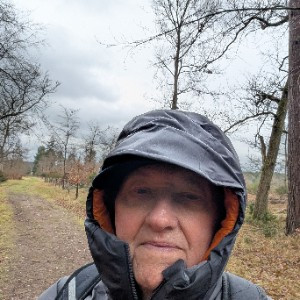
Challenge completed. Goals achieved

Sunday 31st May

Challenge completed. Goals achieved.
So, that’s it, then…My challenge to walk 31 miles in May to raise funds for Dementia UK has come to an end. I did walk each day and, having set myself a target to walk 62 miles, I’ve covered a total of just over 73 miles, which includes 2.6 miles today.
What has amazed me has been the kind and generous response from friends, family and past colleagues. Your contributions total £566, and with gift aid that rises to £675. Thank you to each of you. And thank you Phil Eades for your second contribution. Most appreciated.
My fundraising page remains active for at least a week into June, I believe, if anyone wishes to make a donation. With your help, I feel this has been a fitting tribute to Maria (my wife). Many of you will know that Maria died from dementia and parkinsons in May last year.
My walk today was back at Brandon Country Park, mainly because it was the centre of my daily walks up to covid lockdown. There were many visits after but, as home circumstances changed, they became less regular. 
Don’t know why but today the words of the song made famous by Gerry and the Pacemakers came flooding into my head – You’ll Never Walk Alone. Probably because of interaction on Facebook with many of the people who have been on this fundraising journey. 
One line of the lyrics stood out– walk on, with hope in  your heart. My hope (and worry) on May 1 was to raise enough funds to make a difference for Admiral Nurses. Your generosity has ensured that we have. 
Now, I’m sure there are things I haven’t mentioned to you about the country park, which is in the Brecks.
The Brecks is described as one of the great natural areas of Britain. A place of strange beauty and hidden stories that go back to the stone age. It covers 370 sq miles of countryside in Suffolk and Norfolk. There is a world to discover within them. 
There are mysterious lakes that can disappear . Water levels in lakes such as Ringmere and Langmere rise and fall at difference times of the year, in harmony with underground water. 
Ancient roads make sandy tracks across the Brecks. The Harling Drove and Icknield Way are prehistoric, while Peddars Way was built  by the Romans after Queen Boudicca’s Revolt.
The Iceni, a Celtic tribe, had their homeland in the brecks 2,000 years ago. Queen Boudicca rode out on her chariot from here leading the rebellion against the Romans.
The area has about 400 rare and ancient Pingo Ponds, which are Ice Age features of the brecks. Formed in frozen conditions over 12,000 years ago, they are some of the richest freshwater habitats in the UK. They are home to rare vegetation like water violets and ancient water beetles that survive nowhere else. They can be found further into Norfolk.
Primaeval heathland once covered huge areas of the Brecks. They were created by the nibbling teeth of sheep and rabbits, and by prehistoric tribes using axes. The ‘brecks’ were temporary fields cultivated until the soil became exhausted and then allowed to revert to heathland. 
It is an outstanding area for wildlife conservation. Many threatened species such as spanish catchfly, stone curlew and marbled clover moth find refuge here. 
The area is the flint capital of Britain. It has been dug for centuries at sites such as Grimes Graves for prehistoric tools, and Brandon for flintlock guns and decorative building stone. The art of shaping flint, such as for tools, is known as knapping, a term derived from a Middle English word, knappen. 
Some photos from today, which include a number of scenic shots.
Information board about the heathland., and another showing how the Brecks fits into Suffolk and Norfolk.
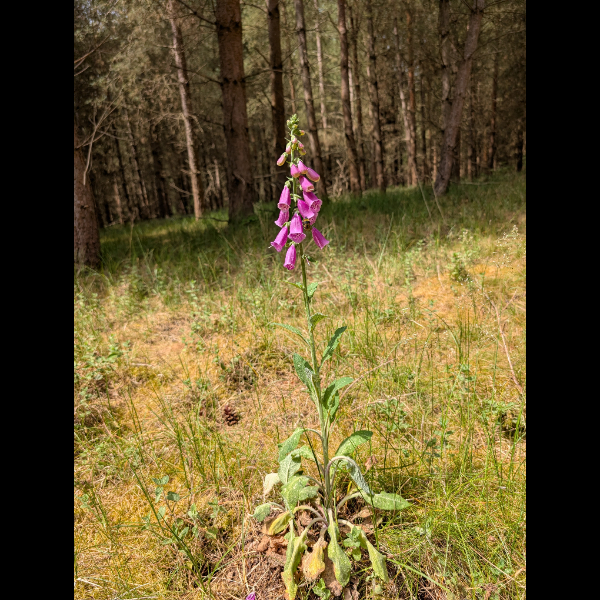
One photo shows a strikingly different lighter shade of green, and another a lone foxglove. 
A tree trunk well on its way back to being part of the soil. The decaying process is a joint effort by fungi, insects, bacteria and microorganisms. 
I hope you’ve enjoyed the stories and photos. Thanks for being on this journey with me.


Cooking smells of many nations

Saturday 30th May


Only one more walk left in our challenge to walk 31 miles in May to raise funds for Dementia UK. Thinking – where shall I go? Waiting for that light bulb moment.  I had a pleasant walk today, around the Buttermarket, neighbouring streets (lots of them) and the Arc shopping centre in Bury St Edmunds.
Saturdays and Wednesdays are market days in Bury St Edmunds. No traffic allowed through the Buttermarket, but plenty of pedestrian traffic to negotiate today. The food of many nations wafts over from the many stalls where people are cooking national dishes. It’s brilliant. 
I’m always amazed at how many fruit and veg stalls there are, and the number of empty boxes stallholders throw into their vans when the market’s closing. I’m also intrigued by how much fruit and veg is still on display when they’re packing up. Where are all these costermongers going tomorrow? I wonder, too, what happens to food that’s getting past its sell-by date. Perhaps they  help community kitchens with produce. Which would be a good solution.
Passing through Mildenhall on my way to Bury St Edmunds today reminded me… Browsing online after walking in Mildenhall Woods earlier this week I came across some eerie stories about the town. 
Such as the phantom food flinger at Building 131 at RAF Mildenhall (operated by the USAF since the 1950s). Several workers have recorded “aggressive poltergeist activity”. Staff reported seeing loaves and other foodstuffs physically flying off shelves. 
Clocks have flown off walls, they say, heavy doors have slammed without anyone near them nor any drafts strong enough to shut them.  Reports state one employee even photographed a tall, ghostly silhouette standing near the delicatessen unit (I couldn’t find the photograph).
Local tales, former base personnel, and the base's own public affairs office have detailed several famous hauntings over the years. One involves a pilot tragically killed when he accidentally triggered his ejector seat while the plane was in a concrete hardened aircraft shelter.
His spirit reportedly walks the area, approaching personnel to ask for a cigarette. Witnesses claim he will hold a full conversation with you, but the moment you break eye contact, he vanishes, leaving a half-smoked cigarette on the ground. 
The old World War II air traffic control tower is the centre of another claim. People regularly report seeing shadowy and moving figures around the historic control tower, along with a dark, heavy mist that locals describe as “a malevolent presence”. 
On particularly foggy nights, people on base have also reported watching a silent, World War I type biplane touch down on the runway and immediately take off again. (Don't ask me how they saw it in the fog...)
Another folklore figure, Old Roger, is credited with saving the base from attack by squadrons of German bombers one night. The moonlit sky was so clear that the base looked doomed. 
But Old Roger used his battered flute to summon up a sand storm so violent that the sky went black. The Germans had to flee for home before a bomb was dropped, fearful of their engines being choked with sand. 
So, if you travel near Mildenhall base, and hear the strains of a flute on the wind, beware – you’ll know a storm is brewing.
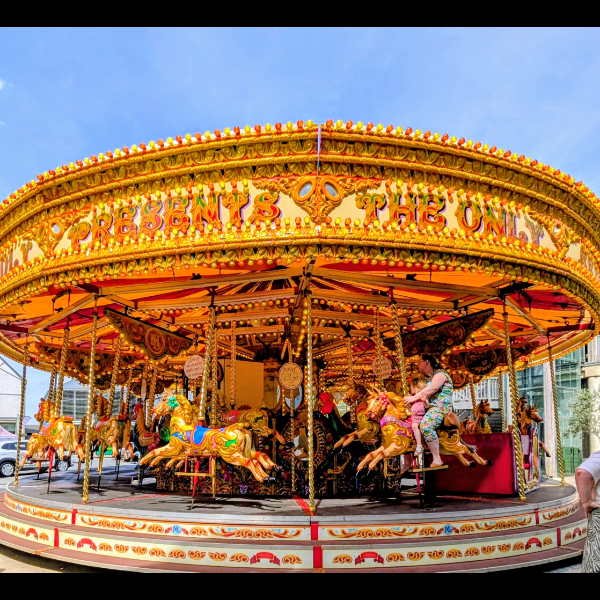
Some photos today, include the Buttermarket, a striking flower shop in St John’s Street, some of the many new flats and other homes being built in the town. And a fairground carousel, which I would have loved a ride on.

Following in famous footsteps

Friday 29th May


I may well have trodden in the footsteps of President John F Kennedy’s father today. Or those of famous author Ernest Hemingway. Both would likely have taken their ‘constitutional’ through the grounds I chose for my dementia UK fundraising walk.
I visited Lynford Arboretum, near Mundford, Norfolk. It has been developed on land which was part of Lynford Hall, and where US ambassador Joseph Kennedy and his young sons visited as guests of Sir James Calder, who owned the hall and was a close friend. As, too, was Ernest Hemingway, who loved the shooting parties.
The Arboretum was developed in the late 1940s by the Forestry Commission. Trainee foresters originally planted the diverse collection of specimen trees, which now features over 200 species from around the world.
The arboretum's grounds were originally landscaped in the 1860s for the historic Lynford Hall estate. A defining feature of the arboretum which remains from that time is an impressive double row of giant sequoia trees, planted to honour the Duke of Wellington. There are about 40 to 50. 
The arboretum is now jointly managed by the Forestry Commission and the Friends of Thetford Forest. It is a popular place to be – proven today by the number of people. It has well-signposted walking trails that wind through the exotic trees, historical parkland, and the surviving water features. There is a wellness trail, which is less than a mile long. It has a very good surface, and there is seating about every 100 yards. The longest of the other two trails is 2.3 miles. These are not suitable for wheelchairs.
There is also a café, and very good toilets. I think they are only available when the café is open.
The estate shifted into public and institutional use after a severe fire destroyed the east wing of Lynford Hall in the 1920s. In World War II the hall was used by the government as an officer convalescent hospital.
After the war it was transformed into a training college for foresters. The trainees began establishing the modern conifer arboretum in the late 1940s, using the surrounding woodland as a living classroom. 
Lynford Hall, a Grade II listed neo-Jacobean country house built in the mid 1800s, is now owned by a private investment group and operates as a hotel and event venue.  It has 38 beautifully appointed bedrooms. It’s versatile and tastefully decorated function room can seat 280 guests and accommodate 450 people for larger functions. 
The hall is known for its rich history spanning British nobility. As well as its famous guests, it has also featured in many famous TV series. The hall was a primary filming location for the BBC comedy series ‘Allo ’Allo!". It was also used to produce Dad's Army, and You Rang, M' Lord?. The hall’s courtyard is famously recognisable as the exterior of Café René, and the British Comedy Society unveiled a blue plaque on site commemorating the show.
A number of photos, including:
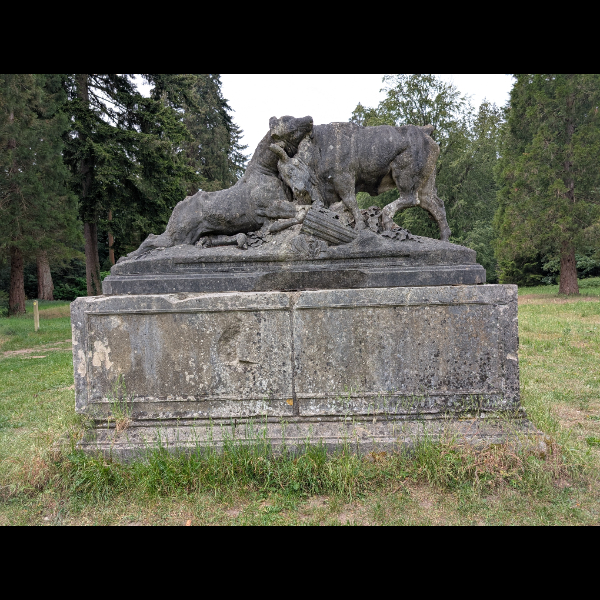
Marble statue of fighting bulls, created in 1863 by French sculptor Jean-Baptiste for the hall 
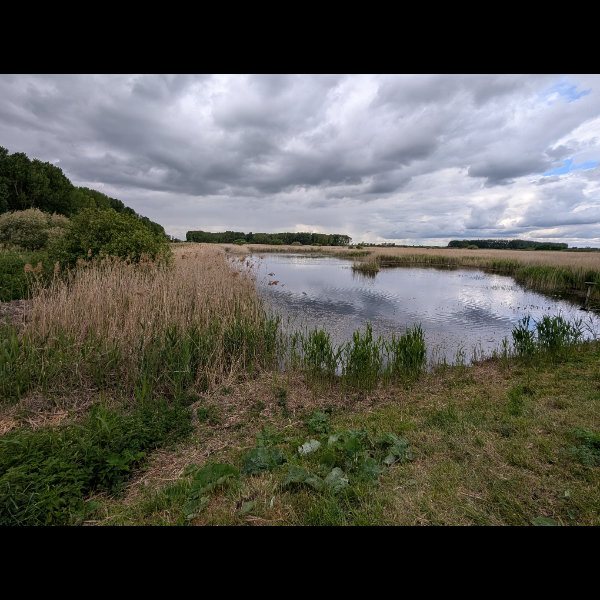
Reeds and iris around a waterway, a lake, video of cattle having a playful tussle
A view of the hall, and what looks like a peregrine falcon enjoying lunch on the bank of the lake
Sequoia Avenue in all its spleandour, residents there since the late 1800s.

Plea to help boost funds

Thursday 28th May

https://fundraise.dementiauk.org/fundraisers/bryankelly


Our challenge to walk 31 miles in May is coming to an end. The objective has been to raise funds for Dementia UK, to help its team of Admiral Nurses support people with all kinds of dementia. They also support the families and carers. 
The nurses offer expert practical, clinical and emotional care to people living with the disease and their loved ones. My wife Maria died from  vascular dementia and vascular parkinsonism in May last year. In Maria’s most critical final few weeks, the incredible care she (and I) received from Suffolk County Council’s Home First (West) team meant I didn’t have to call on the help of Admiral Nurses. But I knew they were there if needed.
I’ve mentioned before, but I have been overwhelmed by the support and generosity shown  by friends and family, by ex-colleagues and people I used to socialise with in my local. The contributions on my Dementia UK fundraising page now total £546.00. I set a target of £200, which I doubled to £400. 
So, thank you to you all.
Now comes the commercial . . .
Some of you who read this may have been considering making a donation but haven’t done so yet. If you are able to, it will help Admiral Nurses to continue to provide this much-needed support to people. 
The link to my fundraising page is https://fundraise.dementiauk.org/fundraisers/bryankelly 
It's slso at the top of this post.
I set a target to walk 62 miles in May. With today’s 2.25 miles I have walked 64 miles.
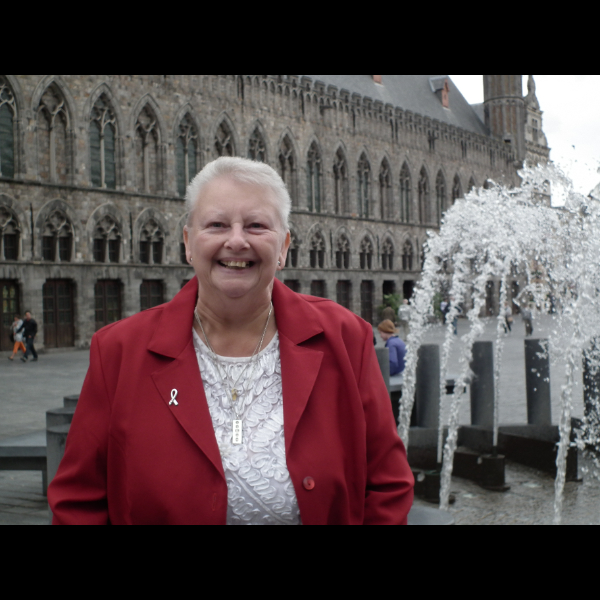
Photos today – just one of Maria, which I took in Ypres in August 2011. We were on holiday in Belgium celebrating our Golden Wedding. It was a favourite holiday destination for Maria (and me), along with Ireland (me too).
And a photo of our rescue dog named Mouse, who I've mentioned some days. He always came on holiday with us – part of the family. 
Tomorrow, fingers crossed, I’ll get to the ‘new’ place I planned to go earlier this week.

My photo wirh Royalty . . .

Wednesday 27th May


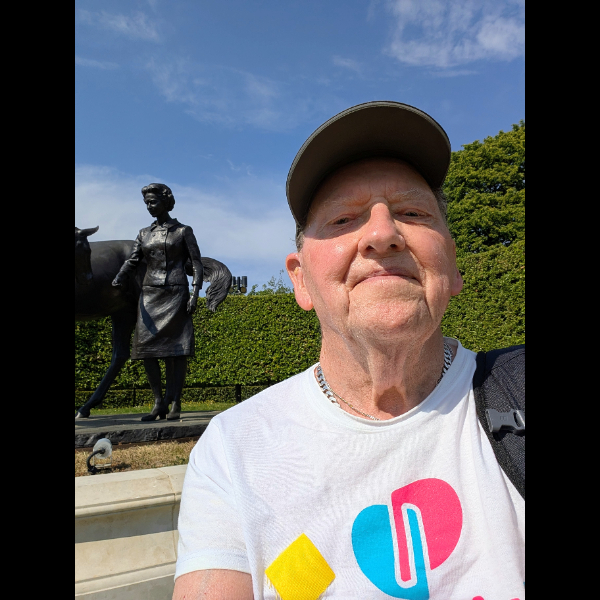
Excited... Had my photo taken with Queen Elizabeth II today. Well, a beautiful statue of the Queen, and horses, at Newmarket - the national home of horse racing. And, er, I took the photograph.
My Dementia UK walk today was in this internationally famous town, considered to be the global centre of horse riding (I had to delay my walk to the ‘new’ place I referred to yesterday). 
It’s such an important industry to the town, and its surrounding area. There are two race courses - the Rowley Mile and the July Course. In Newmarket the horse is king, and queen of course. Drivers, keep a sharp eye - horses crossing main roads (which they do daily and frequently) -  have right of way. Forget the Green Cross Code. It’s drivers’ responsibility to stop. 
The town has between 70 and 80 licenced training stables which deal with about 3,000 horses a year in total. It takes more than 2,000 stable hands to manage them, known locally as stable lads and lasses. 
The training grounds are owned by the National Jockey Club, which dedicates and maintains  about 2,500 acres to training. It also owns about another 2,000 acres. A figure I find astounding is there are over 14 miles of artificial tracks alongside traditional grass gallops. 
The industry is a massive economic driver for the town, supporting more than 7,000 jobs and contributing over 256 million a year to the local economy. It seems that tourism alone on race days is worth almost £10 million a year. 
Answer to a quiz question for you: Who is the only reigning monarch to ride a winning race horse? King Charles 11, in 1671. At Newmarket, of course. He founded the prestigious Newmarket Town Plate in 1665, and decreed the trace must be run “forever” on the same course. 
The photos start with that beautiful statue of Queen Elizabeth with the horse and foal. It’s situated near to the Rowley Mile course. The setting is so impressive, and there’s a long curved seat with room for plenty to sit and admire. 
A famous horse, Hyperion, stands proudly at the entrance to the Jockey Club. He was at the time, and maybe still is, the most successful British-bred sire of the 20th century.
Apologies for this, but the sign had my weirdly-wired brain dreaming up visions of security knights on white chargers, challenging would-be invaders with swords and lances… Equine Security, sorry.
A number of scenic shots – so much greenery to enjoy along the roadside.
An extremely ornate drinking fountain, in memory of Sir Daniel Cooper, a highly popular sporting aristocrat and benefactor, who lived in the town. He died in 1909. It recognises the numerous benefits he provided to the poor and to the local community. It was commissioned by his widow. 
And another horse, in The Guineas shopping mall. A herd of 19 decorated horses were created in 2019 as a public art and charity trail called ‘Saddle Up Art Trail’. This horse remained. I have photos of Maria (my wife) admiring this very horse, while the artist was still painting it. 
The chart for my walk today – very misleading. I completed my two mile target, and forgot to stop and save before driving to another part of town.

Hot dog, and camera-shy squirrel...

Tuesday 26th May


Sizzling. Just about every part of me was on the boil today. Circumstances meant I had to go for my Dementia UK walk in the heat of the midday sun. Again, I thoroughly enjoyed it though. Another walk at Brandon Country Park, where I could be sure of some shade from the trees.
Met a squirrel, who was not keen to have his photo taken, a hot dog (four-legged kind) who didn’t seem best pleased to be out walking, and met a couple near the lake who were amused at the antics of a seagull who couldn’t catch his dinner.
A few photos of the scenery I get such pleasure from on my walks. Comments on a few of them: 
Chopped tree trunks – on the menu for bugs and insects.
Some trees have really striking, powerful architecture – branches as thick as tree trunks and jutting out at irregular angles.
Always a photo of the mansion house, now a care home.
A two-part wooden sculpture in the park, carved from a single log of Brecks’ oak, celebrating the unique character of the Brecks.
The mausoleum, aptly shrouded in trees.
The cooling sound of the fountain in the lake, and the dry, croaking voice of the camera operator (me).
The sun blistering down on the greenery around part of the lake. 
Cooler tomorrow, they promise. I have somewhere new (to me) in mind for tomorrow's walk.
Total mileage I've walked now is 59.85, almost reached my target of 62 miles - walking two miles a day on may.

Stately home for a clergyman

Monday 25th May


I decided to keep my walk today for Dementia UK quite urban. Such a hot day it seemed prudent to be not far away from essential supplies such as cold drinks and ice cream . . .  and cakes…
I set out around Moreton Hall, Bury St Edmunds. Originally, it comprised an 18th-century country house and a prestigious Georgian estate designed by renowned Scottish architect Robert Adam. The hall, originally named St Edmund’s Hill, was commissioned by John Symonds, a clergyman and professor of modern history at Cambridge University.
One hundred years later it was bought by Ferdinand John Eyre, High Sheriff of Suffolk, who renamed the property The Mount. Within a few years it had officially become known as Moreton Hall. It seems fitting that, having been built for a university professor, the mansion and its grounds were transformed into Moreton Hall Preparatory School in 1962. The school closed permanently in 2020. 
From the 1970s the surrounding agricultural land and parkland were developed to create one of the largest residential estates in Bury St Edmunds. 
While Moreton Hall is known as a sprawling residential suburb, the broader area of Bury St Edmunds is steeped in dark history. The Suffolk witch trials held in the town were among the most brutal in English history.
They resulted in over 100 executions between 1645 and 1662. In 1645, the self-appointed ‘Witchfinder General’, Matthew Hopkins, and his assistant John Stearne arrested at least 150 people across Suffolk. About 140  were remanded in Bury St Edmunds, and on August 27 that year 18 people were hanged in a single day - the largest single mass execution for witchcraft in English history. 
Another notorious crime was the Red Barn murder in the nearby village of Polstead in 1827. William Corder arranged to meet his lover, Maria Marten, at the barn. The plan was for them to elope and marry.  But Corder shot her in the eye, stabbed her, and buried her body under the floorboards. 
Corder was tracked to London and brought back to Suffolk to be tried for murder. He was found guilty.
On August 11, 1828, he was hanged in front of an estimated “7,000 to 20,000” people in Bury St Edmunds.
Today, the bizarre relics of the case are kept on display at the town's Moyse's Hall Museum. They include a plaster death mask, a lock of Corder's hair - and a rare book recounting the murder that is notoriously bound in Corder's own skin.
Think I'll pass on that second cake...
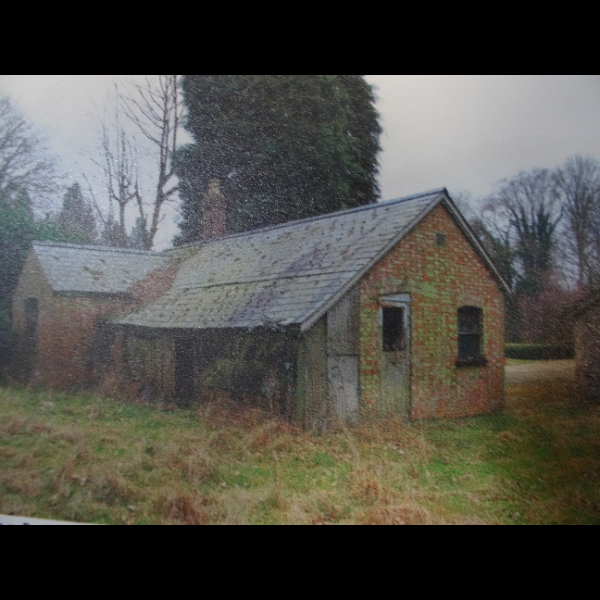
Photos - not great opportunity, but they show how well planners have ensured plenty of greenery lining the main roads in Moreton Hall area, plus a photo of the Hall taken in 2005, and the confusing looking route of my walk (which takes in the cafe in Dunelm...).

Raising rabbits was dangerous work

Sunday 24th May
https://fundraise.dementiauk.org/fundraisers/bryankelly
Walking31milesinMay for Dementia UK

Plans changed dramatically today. Up early to walk before the ground started splitting with the heat, but a call from a family friend put the walk on hold. His car, parked outside his home, was hit (and probably written off) by another vehicle last night. He didn’t realise it had happened. Hoping the police have details. So, his claims form is completed and emailed with about 20 photos…
I returned to Mildenhall Warren this evening. It had an open day today, which I missed, but I enjoyed my walk (2.2 miles). The first documented reference to the warren’s existence was in 1323, when Bury Abbey recorded receiving income from the sale of covies (we call them rabbits).
Pounding the pathways I began to wonder what life was like for the warreners who worked there over the centuries, ensuring constant supplies of covies - their fur and meat was so highly valuable.  
A bit of research, and I was shocked. The work of the warrener was dangerous. They lived in fortified lodges, and history tells of many warreners killed and others badly injured in severe battles with armed poachers. Rabbit poaching was a violent and highly lucrative industry. 
Gangs of poachers armed themselves with weapons such as bows and arrows. They wore steel helmets and soldiers' tunics as protection and to make themselves look more fierce.
Warreners used ferrets, lurcher dogs and even tripwires and guns to defend their turf from the gangs. Records show they would shoot the poachers’ dogs, and their horses. And poachers they caught suffered severe beatings and broken limbs.
After the warreners had finished with them, these thieves faced draconian consequences.  In 1813, for example, a 22-year-old man was transported to Australia for seven years for taking a single rabbit from a trap at a nearby Breckland warren.
At Mildenhall, warreners and their families lived in the highly secure Warren Lodge, one of only two surviving medieval warren lodges in Breckland. The ground floor was used to store equipment, nets, and rabbit carcases while the living quarters were on the upper floor for better security.
The hardy men who did this job wore distinct, heavy-duty cloaks that reached just below their knees. The cloaks were completely waterproof in snow and rain, and were roomy enough for them to hide rabbits around their waists.  Sounds like gamekeeper turned poacher . . .
Just general forest scenes for photos. One shows a land scraped clear which, apparently, allows rare plant and insect species to populate the area. And some oxeye daisies, I believe. And some trees…

Forest to honour a king

Saturday 23rd May


Walks with two royal connections in a week… On Thursday a church that contained the tomb of Mary Tudor, the Queen of France and sister to King Henry VIII.  Today, a walk in King’s Forest, near Bury St Edmunds. It was developed in the mid-1930s by the Forestry Commission and named to commemorate the 1935 Silver Jubilee of King George V and Queen Mary.
The forest’s landscape has evolved over thousands of years. It has yielded evidence of artifacts from Palaeolithic times – known as the Old Stone Age, defined by the emergence of our early human ancestors and the development of chipped stone tools. Remains of early humans and Neanderthals (apparently our closest extinct human relatives) have been found and are said to be of international importance.
The land, on the edge of the Breckland with its chalky soil, was used for centuries to graze sheep. But factors like disruption to overseas trade caused by wars in Henry V111’ss reign saw the sheep trade decline. The soil degraded into shifting sand dunes and heathland. Conditions were so severe that the old Santon church in the heart of the forest was buried more than once.
In the 1930s the Forestry Commission acquired about 5,600 acres of the land. It planted great swaths of pine trees, stabilising the land and producing much-needed timber. The forest still contains commemorative monuments. There is a wide, grass ride flanked by beech trees is known as Queen Mary Avenue.
Today, apart from timber, the forest is home to fallow deer and ground-nesting birds like Nightjars. An array of wild flowers thrives in the chalky soil, including Wild Thyme and Bird’s Foot Trefoil, says the commission. Butterflies like the Dingy Skipper and Brown Angus are other residents.
The area has become popular with people just parking and having picnics, as Maria and I used to. Horse riding is welcomed along with walking, but there are no marked routes, so it pays to have a mobile phone (Google Maps) and [perhaps a compass.
The Forestry Commission is in the process of introducing parking charges there. But I suppose we pay for all pleasures…

From derelict to natural beauty

Friday 22nd May
https://fundraise.dementiauk.org/fundraisers/bryankelly
Walking31milesinMay for Dementia UK

One of the attractions at Brandon Country Park is the Walled Garden. Suffolk County Council rolled its sleeves up in the 1980s and rescued it from the derelict state it had fallen into. It was overgrown, a well was hidden, the surrounding flint wall was crumbling and unsafe from so many years of neglect – as far back as WW1. The garden is now a blend of historic charm and natural beauty. 
It was originally built in the 1880s as an ornamental and kitchen garden for the estate created by Edward Bliss. Now, it is back to its tranquil best. Impressive trees, including Himalayan birch, an unusual handkerchief tree, bay and even a fig tree; a snake labyrinth (for those wishing to perform ancient meditation rituals); shrubs and flowers galore.
There is a water garden, a pumpkin patch and herb garden. Great focus on things of interest to children, such as a Wiggly Trail, two bug hotels (one hotel is never enough, is it…) with photo ID of residents they are likely to see there. 
The well, now so picturesque, was lost in undergrowth and, apparently, covered with a huge concrete slab during WW2. It is about 23 m deep (75 ft), almost as deep as the height of the tree pictured behind it. Just to think, it would have been dug out by hand. 
One of the challenges of the day for gardeners in the Bliss era was drawing water from the well. Very laborious, tiring work. Cleverly, they built a water tank to catch and store rainwater, to be used to water the food and flowers growing in the garden. The tank is still there today.
The 2.3 miles (3.66 km) I walked today takes my total mileage to just under 45 miles. Photos show the garden, and the woodland beyond, where I walked. 
The garden layout. The well, and the tall tree behind – an indication of the well’s depth.
The snake labyrinth, and the water tank.
 The Wiggly Trail, and Bug hotels. 
Found two forest wigwam ‘hotels’ – they were fully booked! 
Tree trunk looked as if it had been veneered.
Kind of the forest – created a couple of steps with tree roots. 
Feasts for all (bugs). A trunk well broken down by forest creatures.
Tried counting the rings on the tree – it must be older than I am. Ancient. 
The avenue of trees leading into the park. Another enjoyable walk to focus on raising funds for Dementia UK. Not sure of I dare do a bit of prompting...

Church with a royal 'resident'

Thursday 21st May
https://fundraise.dementiauk.org/fundraisers/bryankelly
Walking31daysinMay for Dementia UK

I combined my walk today with some shopping, which took me to one of my favourite places – Bury St Edmunds. It’s a vibrant place to live and to visit – about 30 or more pubs are a clue to that. And the number doesn’t include hotels and bars. 
But this total is probably beaten by the number of churches – 54, across 13 denominations. Many of these are active in community outreach and youth programmes, and historical preservation.
I’ve often wondered why this historic market town has two magnificent churches standing side-by-side – St Edmundsbury Cathedral and St Mary’s Church. Today I delved into the reason, and also discovered that one has a royal ‘resident’.
The answer is, they were both built in the 12th century to serve different congregations within the massive precinct of the Benedictine Abbey of St Edmund. St James’s Church, now the cathedral, was built so that laypeople and pilgrims had a place to worship without disturbing the resident monks. In 1914, it was chosen as the cathedral for the newly formed Diocese of St Edmundsbury and Ipswich.
The purpose of its neighbour, St Mary’s Church, was to be a parish church for the local townspeople, as it still is today.  And it is this ecclesiastical building that contains the royal ‘resident’ - the tomb of Mary Tudor, the Queen of France and sister to King Henry VIII. 
Both of these magnificent places are open to visitors outside service hours, and often provide guided tours.
Another famous landmark in the town is the Greene King brewery.  It was founded in 1799 by a 19-year-old, Benjamin Greene. He handed the business reigns to his son Edward in the 1830s, and by the 1870s production had grown to an astounding 40,000 barrels a year. 
Within 20 years rising competition and the pressures of the temperance movement saw the brewery’s merger with rival Frederick William King. 
Hence today’s name, and its development from a single regional brewery into a powerhouse that operates over 2,700 pubs, restaurants, and hotels. 
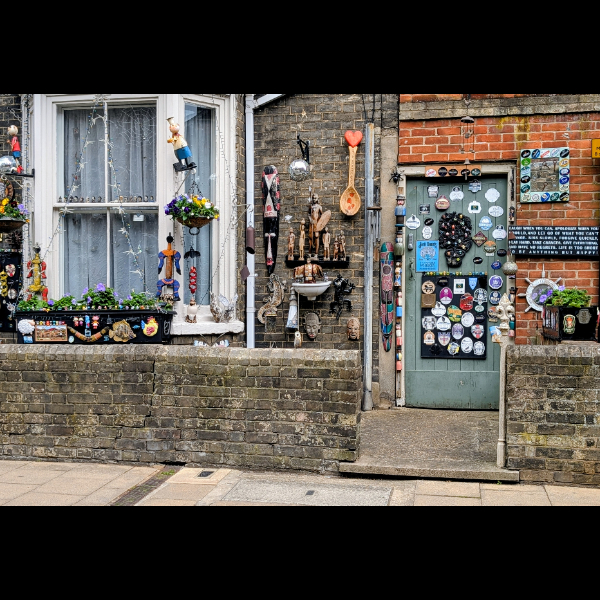
Bury St Edmunds is a lovely town – it frequently features in the Sunday Times Best Places to Live Guide, and it’s noted for its low crime rate. Photos show quirky displays in a front garden, and a  signs purporting to be a historic plaque shows the humour of the place. I love it.
The Guildhall is also pictured - the oldest continuously used civic building in the country. In WW2 a Royal Observer Corp unit based there kept RAF Fighter Command updated with details of incoming enemy aircraft. It's credited with helping to save thousands of lives.
The operations room has been frozen in time, the only surviving one of its kind in the world. It's a favourite exhibit for visitors.
The ivy-clad Angel Hotel, situated opposite the cathedral, is also pictured. Plus another church, St John the Evangelist, situated in... St John's Street.

Park with Majesty and Fun

Wednesday 20th May


A local place that Maria and I never visited was Nowton Park in Bury St Edmunds. It never really pinged our radar, but by chance I saw some literature recently that made me think it looked a good place for one of my Dementia UK walk31milesinMay ventures. Having been there today, it’s worth more than one visit.

The 200-acre park was a private estate developed by the Oakes family in the 1800s. Henry Oakes was the last lord of the manor when the estate was acquired by St Edmundsbury Borough Council in 1985. It’s now owned and managed by West Suffolk Council. And what an  incredible job they are doing in retaining so much of the splendour and making it comfortable and fun for adults and children alike.

I took the yellow walking trail (there’s a shorter red trail) which took me through forest, a meadow, an arboretum, past a maze, a pond and a lake, and I covered about 2.4 miles. I found it very cathartic – Maria died a year ago, but at times it’s hard to get past the trauma of the whole process, which lasted a number of years.

Many family carers turn to Dementia UK’s Admiral Nurses for help. Which is why the fundraising walks by more than 6,000 of us in UK are so important. The money helps the service to care for dementia sufferers, and their carers when they need some support.

So, Nowton Park… It has a majestic avenue of lime trees, and a maze designed in the shape of an oak tree, as a tribute to the Oakes family. It’s been created with 2,500 hornbeam trees, making up over two miles of hedging. Take the park’s advice – photograph the map at the entrance before you go in or you might be sending out distress calls to International Rescue…

The arboretum has trees from around the world, including eucalyptus, Kentucky coffee trees, and paperbark maple from China. There’s a totem pole, carved from western red cedar, standing nearly 11 meters tall. 

There are all-weather football  pitches, pétanque courts, a 3 km cycle route, picnic and children’s play areas. The list goes on. And, importantly for the place to get on my ‘visit-again’ list, a café (and loos), plus ample parking. Very satisfying walk. My total mileage walked is just about 45 miles now.


Flywheel that teally flew...

Tuesday 19th May


One of the advantages of living in communities like Lakenheath is the wealth of stories that abound. So many interesting people. An example was Bill, a neighbour and friend (no longer with us) who spent his life in the Sedge Fen area and was part of a large farming family. He remained a bachelor.
He used to tell stories of the days when Sedge Fen, a hamlet,  had its own school. It was set up by Chivers & Sons to support families working in their factory, established near the railway station of Shippea Hill in the early 1900s. 
A huge flywheel drove the machinery in the factory, said Bill. But one day there was an incredible noise like an explosion and the flywheel broke free. Workers looked on in horror as it crashed through a factory wall and bumped along the village road at high speed, coming to rest in a field without harming anybody. 
The hamlet’s name derives from its primary resource at the time - a tough, reed-like sedge used for thatch and fuel. 
I planned to do my Dementia UK walk today in and around Sedge Fen, now a small, rural community, just west of Lakenheath. But the narrow roads are really not suitable for walking. It’s a small place, and I felt I might be intruding on people’s privacy. So, I walked in the nearby town of Littleport, which Maria loved (particularly a haberdashery shop).
Back to Sedge Fen: its history and landscape have been shaped by 17th-century land drainage, by Victorian conservation efforts, and the early 20th-century agricultural boom.
Victorian naturalists famously explored the area for rare butterflies, moths, and bog plants. But in the late 1800s the sedge and peat industry was facing collapse. Nearby Wicken Fen survived by the good fortune of becoming one of the first pieces of land to be acquired by the National Trust, and was preserved as a wildlife sanctuary.
The agricultural boom hit the area in 1912 when Chivers, renowned even then as a food processing company, developed vast orchards and a processing factory at Sedge Fen, employing hundreds of workers. 
Time has changed the historic fenland village of Littleport. It has evolved from a medieval fishing and trading port into a modern, vibrant market town. 
A black point in its history – termed the Bread or Blood Riots – happened in 1816. Veterans returning from the Napoleonic Wars and agricultural workers faced severe unemployment and unaffordable grain prices. There were riots in which property was damaged. That resulted in five Littleport men being executed and several others were transported to Australia. 
St Mary’s Church in Littleport has a memorial tablet dedicated to the victims of the riots. 

Home, sweet home

Monday 18th May


Humans and wildlife have quite a lot in common when it comes to hunting for a home. People want a home that is suitable for them. Wildlife do, too. Which is why The RSPB site at Lakenheath Fen has been so successful.

It’s all about understanding what potential residents need from a home. And the success of the RSPB’s management of the site has, in my view, been amazing.  On my walk there today (bit of a soggy one) the booming call of the bittern underlined the achievement in helping to save this bird from extinction in the UK.

The site, heavily farmed arable land, was bought by the society in the 1990s and has been turned back to the reed beds, grazing marshes and woodland that would once have been common in the area.

The greatest successes of this venture, to date, have included the successful breeding  of Common Cranes, missing from the area for 400 years; the Western Marsh Harriers; and expanding populations of Bearded Tits and Water Voles. And of course, notably the Bitterns. You can regularly see the Eurasian Golden Oriole now as well.

Recent expansion, to re-wet nearly 300 acres, has attracted vulnerable species like the Lapwing and Redshank.

So many success stories. Children seem to love the sights and sounds, too. And you can even borrow binoculars, for a small deposit, I believe. 

My wife Maria found the area so peaceful, before and during the first years of her dementia. The society allows people with blue badges to take their cars best part of 1 km to a small parking area near to seating overlooking one of the reed bed lakes. Happy memories. 

Photos include (I hope) one of the Golden Oriole. 


The war against evil

Sunday 17th May


Plenty of time to ponder on my daily fundraising walks for Dementia UK. And frequently it's wondering what events and which people helped to shape this area of East Anglia.

Walking through Brandon Country Park today,  it is hard not to hark back to the important role the area played in both world wars.  Early in WW2 the whole of the estate (not a park in those years) was commandeered by the war office. The  historic pump house and bothy were used to store ammunition, sugar, flour and other essential supplies. 

The area was a strategic training ground for the Home Guard, the army of volunteers who later became known as Dad’s Army. But there was top secret work afoot, too. Winston Churchill wanted a small elite force of Home Guard Commandoes, trained in guerilla tactics. Just 15 men whose job it would be to sabotage railway lines and bridges in the event of a German invasion. They would operate from an underground bunker.

That role was never needed, thank goodness. But as secret plans for  D-day were developed, thousands of troops passed through the training facilities deep in Thetford Forest to prepare them for what lay ahead.  Men and equipment were stationed throughout Brandon, and families were often required to billet soldiers in their homes. 

Times were serious and troop training was vital. In 1942 the training facilities were developed quickly. A ‘nazi village’ was established. The price was pretty dramatic for local people. It involved the complete evacuation of six villages.

The area had already been used by the military in WW1. The first tanks produced in Britain were tested on a 25 square-mile area of Elveden Estate. The cover story, to throw any potential spies off the scent, was the military were building giant water tanks for troops in the desert. Which is where the military got the name tank for the new beasties they were trialling.

Today, the training facilities in the forest are as important as ever. There is an Afghan village used for training during that conflict. More recently our military has trained thousands of Ukrainian troops all the skills required, including trench warfare. Many Ukrainian solders gained the skills to be trainers in their home country.

In warfare, preparation is key. And so it is in fighting an evil enemy like dementia. Admiral Nurses are there to help the victims of this war. Your support provides the ‘ammunition’ which enables them to do so. Thank you.

I walked 2.2 miles today, taking my total to 33 miles.


Supporting Admiral Nurses' vital work

Saturday 16th May

The purpose of my daily walks in May is always at the forefront of my mind: to raise funds for the vital work of Dementia UK’s Admiral Nurses. I know that will be the same for the thousands of people throughout the UK who joined the call to help fundraise for the organisation. 
The total had already reached almost an amazing £450,000 a few days ago. The money will help to fund the work of the team of Admiral Nurses. They specialise in helping to support people living with dementia, and their families – many of whom are full-time carers. The work of the nurses is provided free. It can range from providing practical solutions, clinical guidance and much-needed emotional support. 
I am so grateful to the large number of friends and family who have supported the cause via my Dementia UK Facebook page. I know many of you are doing this as a tribute to Maria. The walking is helping me to get back to normal, some suggest. It is, though, a new ‘normal’. 
I’ve sorted quite a lot of information about the vital role played in WW2 by what is now Brandon Country Park. I plan to write about it tomorrow after another walk there (different routes just about every day).
Photos today include some scenic shots; one of the wide open spaces mentioned yesterday to encourage the spread of rare plants (half of a huge area already sporting signs of new grass); chalk and flint, two ingredients that make for the poor soil quality  that’s so good for some plants and wildlife; the Lime Burner Trail – for cyclists with nerves of steel. The banked curves on the trail point to why it’s not wise for us pedestrians to use it as a footpath; decaying tree trunks - home sweet home for the insect world; inside the welcoming café at the park.

Homes for rare species

Friday 15th May


Another part of Thetford Forest visited today, and the  2.1 miles covered takes me up to the 31 miles walked in May. So, only another 31 to go – I committed to walking 62 miles.

It’s another area that dog Mouse and me used to walk around. Lots of changes going on in the forest – all part of an exciting conservation project, says Forestry England. It’s creating weaving corridors of open habitat to help rare plant and insect species to thrive.

The whole forest is (and here comes that phrase again) a Site of Special Scientific Interest. The forest is home to 20 plant and 129 insect species which are nationally scarce.

 Many of these rarities are found along the open verges next to forest tracks. Which is why Forest England is creating wider open verges, encouraging these rare species to spread in the new habitat.  And, what a plonker, that’s one photograph I forgot to take! Next time.

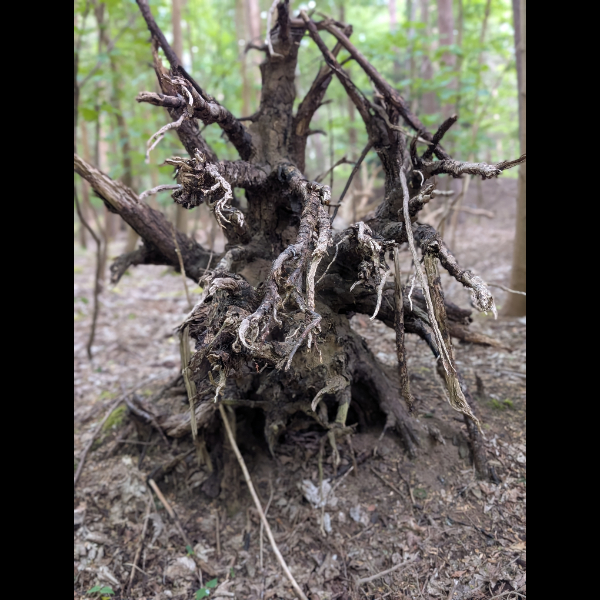
Photos  I did take include a medieval torture machine (tree roots actually – but they look sinister), tiny forest flowers (I’m sure they have a pretty name), new life on the tips of fir branches, and some of the forest tracks and scenes.

On a personal note, today would have been Maria’s 84th birthday. It has been easier than I’d feared – happy memories shining through. So, off for a couple of pints of Guinness tonight to toast her birthday. My excuse, and I’m sticking to it . . .


Flint sparks up again

Thursday 14th May


Amazing how frequently the use of flint crops up in this part of the world. It was there again in my walk today for dementia uk. I went to Maidscross Hill Local Nature Reserve, my first time there since before covid lockdown. Which is silly really because it is so near to my home.

It’s 111 acres of, generally, peace and quiet. It skirts one side of RAF Lakenheath,  home to 48th Fighter Wing of the United States Air Force. Which means it isn’t always quiet, but so many of us value the frequent free ‘airshows’.

Maidscross has big open spaces, then undulating scrub with gorse, bushes, trees. And there is an absolutely huge gravel pit where thousands (if not millions) of tonnes of sand and gravel has been excavated over the centuries. As far back as 1840 its bounty was used for road surfacing and general infrastructure. 

Its output expanded with work to surface the fenland droves (roads to you and me), creating work for local people, digging it all out. Huge amounts were transported to other parts of the country. It was carted to the nearby quays at Lakenheath Lode, a man-made waterway dug pre-17th century to drain the marshy fenland. From there the cargo was taken by horse-drawn barges - fen lighters – to the River Little Ouse for shipment around the country.

Sounds so swashbuckling to me that the Lode meets the Little Ouse at Botany Bay.

The unique geology at Maidscross - where Ice Age river deposits sat directly on cretaceous chalk - enabled the pits to harvest chalk for nearby lime kilns. And the flint – like other sites in the region flints were mined to make gunflints for British military firearms. 

The complex geology has made the reserve a Site of Special Scientific Interest. Part of the reason is it includes pebbles of Bunter quartz and quartzite -  washed down from the Midlands by the now extinct Bytham River. This passed through Maidscross over half a million years ago. So, now I know why where I live in Lakenheath is Quayside Court.

My walk today covered a fraction over two miles, taking my total to just on 29 miles.


Just walking in the rain . . .

Wednesday 13th May


Memo to self – waterproof my walking boots… My first walk in the rain, and it didn’t take long to seep through to my socks. Thoroughly enjoyed my walk, though, covering 2.25 miles. Meandered on a route that took me part through Mildenhall Woods and the Warren, both part of previous walks. 

A couple of woodpeckers acted as a footstep metronome, but the pace was more suited to Road Runner, so I politely declined their help. The river alongside the woods is a man-made channel dug out in the 1950s to stop flooding in villages like Lakenheath. The cutoff, as it’s known, leads to the River Lark. 

There are a few scenic photos today, plus a few others that caught my eye (and/or sense of humour). Such as the tree cut into logs, which my boggled mind saw as Mildenhall’s answer to the Giant’s Causeway, and tall, straight trees devoid of foliage until the very top – which, I thought, is how L S Lowry would have painted them, to go with his matchstick men and matchstick cats and dogs…

A piece of history at the warren is the 600-year-old medieval Warrener’s Lodge, made of flint and lime mortar. It is skeletal inside now, but an illustration on a storyboard shows how it would have looked.

Apparently, the conies hanging on the racks inside the lodge created quite a stench.  It took the carter who collected them three days to journey to London, to the skinners and poulters waiting for the meat and the pelts. Reckon he must have needed a bath afterwards.

One of the grand occasions where rabbits - sorry, conies - graced the banqueting tables was in honour of the Archbishop of York in 1465. Apparently about 4,000 conies were served at the event. 

When the woods were bought in 1934 by the Forestry Commission, to extend forest land, rabbits became about as popular as a fart in a space suit, if you’ll forgive the expression. They were dining on the newly-planted seedlings and the shoots of young trees. About 30 warreners were kept on to rid the area of rabbits. 

Looking forward to tomorrow’s walk now…


Training for trench warfare

Tuesday 12th May

Revisited an old haunt of mine for walks over the years – Mildenhall Woods, very near to RAF Mildenhall, which has been home to the US Air Force since 1950. The woods’ military links began long before then. They were used in World War One to train soldiers in trench warfare. 

The woods provided excellent cover, making them ideal for training exercises and protected this secret military training from snooping aerial observation. The area enabled troops to be prepared for the harsh realities of the Western Front, covering crucial skills such as trench digging, construction, and combat tactics.

The training grounds had close links with local units, including the Suffolk Regiment. Some of the practice trenches are still visible, I’m told. These were often dug by volunteers and the soldiers themselves. 

I walked 2.75 miles today (4.42 km). It takes my total to 26.8 miles (43.1 km), so I’m ahead of the personal target I set myself of walking two miles a day. And not far off the target to walk 31 days in May set by dementia uk. And raising funds for their vital work with people suffering from dementia, and caring for carers. That is the priority, the focus of what thousands of us who took on this challenge are doing throughout the UK. Wow, that would be some group hug – Guinness Book of Records stuff!

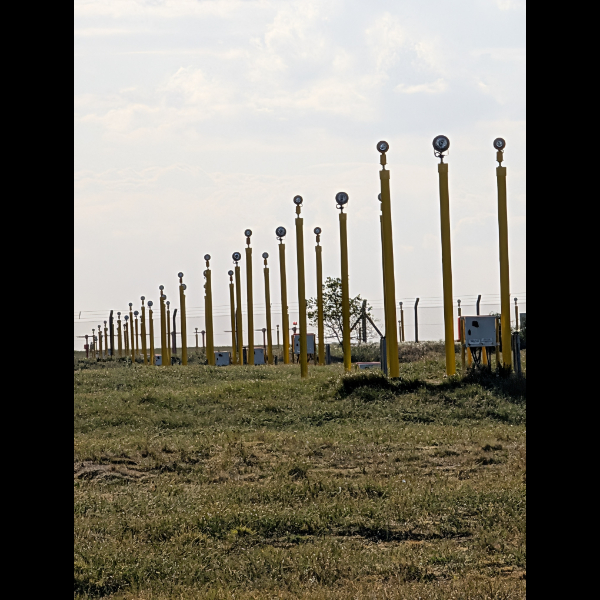
I’ve included a number of photos. One or two odd ones – a lazy tree, growing along the ground almost, the approach lights at RAF Mildenhall (they’re part of the woodland walk) and cattle in a huddle in a field nearby. And lots of trees, and woodland paths.


Speaking ancient tongues . . .

Monday 11th May

Wæs þū, Hrōðgār, hāl!... Ealle menn sindon frēo and gelīce on rihte. . . If you understand this, you were strutting your stuff around East Anglia in  Anglo-Saxon times – AD410 to AD1066. I’m showing off this new knowledge after visiting the Anglo-Saxon village and country park at West Stow, the starting point for my walk today.

The two statements translate as Be thou healthy, which still sounds archaic, and All men are free and equal in right. The village has buildings representative of the period, archaeological ‘digs’, a very impressive museum, gift shop and a café…which is why my 2.25 mile walk today (3.6 km) took so long. 

The facility is an incredible learning centre for children, and schools regularly take coachloads of children there.   It’s highly interesting for grown-ups too. There are pleasant walks through the park and along beside the River Lark. 

Learned a few things on my walk, too. For instance, that people who fish are not fond of otters. Apparently, they’re far more accomplished at this fish-catching art. Heavy steel gates and fences shielding one area proclaim with a notice: Otters are a real threat in this area. Please ensure the gate is closed immediately.

There are storyboards on the Beowulf walk, and a nice touch along the river bank are the number of benches so wrinklies like me can take a break or just sit and ponder.

I’ve included photos showing some of the exhibits, including the Anglo-Saxon homes, the mini archaeological ‘digs’, views along the river walk, the back half of a duck (!!) and museum exhibits. 

Now, where shall I go tomorrow…having a ponder.

A favourite place for me

Sunday 10th May
Personally, I consider Brandon Country Park to be one of the nicest places to go walking. I was back there today. There are marked routes, but the endless criss-cross of pathways over a very large area makes it easy to create your own routes. 
There are narrow tracks shooting off deeper into the forest. There can be discussions with cyclists when you use these. There are some pretty hairy courses built for cyclists who have the  nerves to ride them.
The park has so much going on over the year. There’s a focus on sparking children’s interest in the natural world, with treasure trails and an incredible secret garden. People on early morning walks sometimes come across wheeled sleds pulled by teams of huskies.
 A restored 19th century engine house features how water was supplied to the whole estate, including the mansion house, in those times. The pumping house was built over an existing 150 ft deep well that had been dug by hand in the 1800s. An engineering feat on such sandy soil. 
The soil in areas on the Brecks, which includes the 100-acre heathland, appears blue-grey, silver grey, even pale blue. And some of the grassland appears silvery-grey. The cause is the nutrient-poor condition of the soil, which has a high content of flint, chalk and sand.
These unusual soils are the reason the Brecks supports rare wildlife such as stone curlew, woodlark and nightjar. The heathland is designated as a site of special scientific interest (SSSI) partly because of this unique soil environment. 
Always special moments for me on the heathland are hearing the song of the skylarks, and watching their aerial antics. It wasn’t until I acquired NHS hearing aids in 2014 that I could actually hear them properly. 
I’ve mentioned before, but I’m so grateful for the financial support for dementia uk which people have given via my fundraising page.  Thank you to Roger Govier, Sarah Dilliangham, Kevin and Hazel Kelly, and Sue French for the latest contributions.

A day of remembering

Saturday 9th May
Not very much to say today. My walk was in Bury St Edmunds - it was one of Maria's favourite places.
Name-dropping here, but she particularly liked Waterstones in the Buttermarket, the Apex in the Arc, Dobbies garden centre... and the sausage rolls at the Wild Bean Cafe! All of which suited me - ample supplies of food and coffee... 
The cafe staff were particularly nice to Maria, treating her like royalty.
Walked over two miles, but only 1.75 miles recorded. I forgot to turn the app on.
Only two photos. One of Maria, and me, with the Apex in the background and so many happy memories swirling in my head.
The yellow patch on my T shirt - it was Maria's favourite colour. A tribute today to mark the first anniversary of this beautiful woman's death.

Disrupted by saboteurs ..

Friday 8th May


Hard to believe but before the mind-boggling project to drain the Fens in the 17th century, travel to and from Lakenheath (where I live) was difficult. It relied on specialised knowledge to navigate the vast wetland of treacherous marshland and peat bogs. 

The village was accessible by barge via Lakenheath Lode, a water channel that connected to the River Little Ouse. But the drainage scheme had its detractors – the Fen Tigers, local marsh dwellers who made their living from ferrying people around. They turned saboteurs in a bid to wreck the scheme.

Luckily, I didn’t meet any Fen Tigers on my walk near to the lode today – just a few inquisitive horses. There are friendly Fen Tigers now – the local speedway team based at Mildenhall stadium. 

My walk began on droves between the Lode and the River Little Ouse, with the vast expanses of the high quality farmland of the fens stretching out to the side of me. A left turn after about a mile, and chats with a couple more horses, and I was back into the village where I stopped for a few minutes of contemplation (and half a litre of water). 

It came to mind what a great choice of food is on offer here, in a village of about 6,000 people I guess. We have fish and chip shops, purveyors of kebabs, pizzas, Chinese food (a take away and a restaurant), Japanese, also Italian, Indian, Filipino (all three are restaurants), a sandwich bar, and the Mola café, which is a favourite for me.

On that note, I headed off home – feeling hungry. I’d walked my two miles (3.27 km), the daily target I have set myself.

A few more photos:

* Tranquillity. The River Little Ouse.

 * Think I interrupted a tasty meal of meadow grass. 

* Beyond the tall grasses, fenland as far as the eye can see.

* Two more horses I met.

* Another peep at the River Little Ouse, which flows west to Brandon Creek, where it joins the River Great Ouse on its way to the ocean. 

* A place to relax near to the village’s war memorial. A reminder of the cost of freedom.

* Beautiful trees provide the shade for people enjoying a rest on the memorial seat (today, me).

* Our memorial erected after WW1, which now includes names of lives lost in battle in WW2.

* A storyboard of the village near me. It includes the 17th century home of Thomas Kitchener, an ancestor of Lord Horatio Kitchener, famous for his role in WW1.

* The village has three libraries – including two redundant telephone boxes. In the heart of the village is a modern library with outstanding facilities. It also has a great focus on the young, with an impressive programme of events for children. 

* My Mapmywalk log for today.


Mahurajah and a freedom fighter

Thursday 7th May


Went urban with my walk today – around Thetford.. Walked 3.61 km, 2.24 miles. 

Two historically famous names associated with the town are Thomas Paine, born there in 1792, and the Maharajah Duleep Sing, who became a close friend of Queen Victoria. He eventually settled at the Elveden Estate, which is just a few miles from Thetford.  His is buried in Elveden church yard.

The estate is now associated with a global brand – it’s owned by the 4th Earl of Iveagh, Arthur Edward Rory Guinness. It’s one of Britain’s largest farming operations. 

 Back to Thomas Paine. He went to grammar school in Thetford before emigrating to the British American colonies in 1774 with the help of Benjamin Franklin.  Thomas is credited with being the first champion of the Rights of Man. He also had a key influence on the American and French Revolutions, and was a staunch opponent to slavery – fighting for the freedom of African slaves and for them to be compensated.

A gold statue of him, erected outside King’s House in Thetford in 1964, was a gift from the USA Thomas Paine Foundation. 

The town also has other famous military connections – its link with Dad’s Army. Much of the filming was in nearby Thetford Forest. There is a museum, again entry is free (donations welcomed), and the nearby Bell Hotel has named its main rooms after leading characters in the series. Apparently, it was one of their regular haunts, and there are many photos of the actors on the hotel walls.

A few photos:

Charles Burrell Museum. The company was a famous manufacturer of steam engines – traction engines etc. Museum entrance is free. 

The gold statue of Thomas Paine, named by one of my friends who didn’t like it as Golden Balls…

Attention – Dad’s Army Museum. The iconic 1935 van known as L/Cpl Jone’s butchers van is one of the displays at the Charles Burrell Museum. The van has just undergone a major restoration which has cost £10,500. 

A statue of a seated Capt Mannering, on a bench by the river front, and me. I thought with him being a bank manager I’d tap him up for a donation to dementia uk… No luck there. 

A place for some peace and quiet – the King’s House gardens. Some plants in bloom, others springing into life. 


Stand by your beds...

Wednesday 6th May
Visited the wartime training grounds  of the famous 7th Armoured Division, The Desert Rats, for my walk today. There is a museum there, which has open days and can be visited by appointment.  The surrounding woodland walks - part of Thetford Forest - contain storyboards with descriptions and photos of life at the camp.
It was the first time this famous British fighting force had come to England. They came from Italy in 1944 to prepare for the D-Day landings.
it's a brilliant place for walks - so many pathways in most directions of the compass, and free parking.  
I was so engrossed with the information that I didn't realise how long the walk was taking me. I was overtaken by a tortoise twice !! I walked 3.28 km (a fraction over two miles).
I'm including photos of the storyboards, which don't need explanation. Other photos are: 
* A Cromwell tank, nicknamed Little Audrey II, sitting proudly at the museum entrance.
* Memorial plaques on the plinth
* One of the two museum Nissen huts, amusingly named Ron And Tina Scotts Hotel.
* Only one careful owner . . .  ambulance and motorbike in desert camouflage.
* Miles of pathways  through the forest.
* Life springs eternal from a fallen tree.
* A mystery of life - why would a water pumping station (or is it sewage?) need a windsock?
* The Desert Rats storyboards.
Hope you enjoy the information.

Familiar territory

Tuesday 5th May
Today's walk, at Mildenhall Warren, i used to do regularly with my dog Mouse. It's a Site of Special Scientific Interest. Rabbits were bred there for meat and fur for 700 years, up to the mid 1930s. Evidence has also been discovered there of human habitation dating back half a million years.
Distance walked today was 3.28 km, a littke over two miles.
A few photos.
* The opening Warrener storyboard.
* Forest paths I've trodden so many times before, 2 pics.
* Amazed at how swiftly  new fern appears. Almost overnight, it seems.
* New life for a fallen tree. More like, new life on and in a fallen tree.
* Another forest area that, pre covid, was open land planted with hundreds of 25 cm saplings. My, how you have grown...
* My route today, and distance travelled.

Back to the park

Monday 4th May
Thoroughly enjoyed my walk today, at Brandon Country Park again but a different route. I walked 3.64 km (a shade over 2.2 miles). The huge car park and overspill park were chock-a-block with vehicles but I hardly met any people out walking. Think the cafe and the children's playground were the big lures. 
A few more photos today. I'll put the captions here - hope they're not too confusing. Stay safe all of you on this challenge.
Giant Redwood tree.  The storyboard shows it's a bit of a tiddler compared with the biggest in the world (in California I believe). The bark is naturally fire resistant.
Absence of ducks when the fountain's on - I think they're frightened of getting wet 😂.
Not sure how this horizontal branch doesn't break off.
Felled trees left in the forest to become homes for bugs and fungi. It would cost too much and likely cause a lot of damage to remove odd trees that have to be felled for safety reasons.
Not exactly the ritz, but lovely for children to play in.
Pre-covid this area of the forest was a sea of saplings about 25 cm high. When trees are ready for the wood to be harvested, huge areas are cleared in one go and later replanted. An emphasis has been on replacing pines with deciduous trees.
The mausoleum that Edward Bliss built for his wife and himself. When the estate changed hands in the early 1900s, their remains were moved to the local churchyard.
The route I took today.

The beauty of Bury St Edmunds

Sunday 3rd May
It's such a lovely town, one that my wife Maria and I visited frequently. And I still do. Today it was busy - too busy for many photos. But I walked 3.1 miles (forgetting to hit the app pause  button when I stopped for coffee... a couple of times).
Re why we are doing this - to raise funds for dementia uk - I can't believe the support that family and friends are giving me. Their contributions have more than doubled my original target of £200. My thanks to the latest contributors, Jonathan Palmer, Jane and Nobby, Phil Eades, Janet Salim, Pam Yilmaz and Mandy Turnbull for sponsoring me. 
I'm posting a few photos from today:
A walk in Abbey gardens. Amazing flower beds.
The remains of a powerful 11th century Benedictine monastry. It was within these grounds that the barons swore to demand the Magna Carte in 1214.
The 14th century Abbey gatehouse.
The imposing Corn Exchange. It is now home to a Wetherspoons pub.
The Nutshell - the smallest pub in Britain (Guinness Book of Records). 
My Mapmywalk log of today's journey. 

A day out with the birds...

Saturday 2nd May
The feathered kind! 😂. Went to the RSPB site at Lakenheath Fen. Took my time and had a lovely, leisurely walk, covering 5.76 km according to the Mapmywalk app (sounds a lot further than 3.6 miles).  
It's an incredible facility with friendly volunteer staff. The fen is home to the elusive bittern, which has a booming call that can be heard for up to three miles.  The bird id app I use,  Merlin ,  was produced by Cornell Lab and is distributed free to encourage more people to listen to the bird song around them. It can id several birds at once and highlights each one singing.
Came across a couple of families of geese and the 18 goslings they had between them - all blocking the path. A lot of hissing and extended necks from the parents before they moved to the side to let me and another couple walk past. 
I have some photos which show what a great place this is for wildlife. Maria, my wife, came here with me sometimes. They allow just a few blue badge cars at a time to a parking area about half a mile in, where there's a seating area near a lake. So, today, back to the reception area, an ice cream and black coffee, and about half an hour relaxing at one of the many almost hidden picnic tables.
Plans for tomorrow... something different...

Walking in the cool of the evening

Friday 1st May
Beautiful  walk around Brandon Country Park. Covered just under 1.5 miles, but walked 3 miles in all today, walking up to the village (Lakenheath) a couple of times. 
More important, I'm overwhelmed at the support I'm receiving from friends and family. My target was £200 - the total now stands at £280. Thank you to new contributors - Martin Rickatson, Lisa Law, granddaughter Charlene, grandsons Liam and Cameron (and his partner Chloe) and one of my sons, Richard. A great tribute to Maria.
Perhaps more tomorrow about Barndon Park.

Great walk in the cool of the evening

Friday 1st May
W

It's getting closer...

Monday 27th Apr

 Monday 27th Apr

Not long to go for my daily walk in May to help raise funds for dementia uk. Can't thank you enough for the donations already. The latest, from Jean Handy and Pete and Gerry Clark, have given me the confidence to increase my target to £250. 
Every £ raised  helps dementia uk's Admiral nurses to carry our their incredible work for patients and support for their families. 
So this is a plea to people who know me, or even don't know me but are willing to help, to make a donation. 
I'll keep you good people informed on where I've been on my walks, with photos when I find things of interest, and my distance walked. 
My thanks to you all.

It's getting closer...

Monday 27th Apr
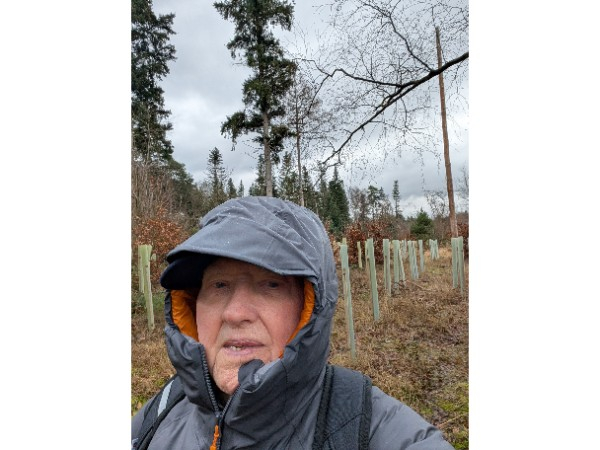
Not long to go for my daily walk in May to help raise funds for dementia uk. Can't thank you enough for the donations already. The latest, from Jean Handy and Pete and Gerry Clark, have given me the confidence to increase my target to £250. 
Every £ raised  helps dementia uk's Admiral nurses to carry our their incredible work for patients and support for their families. 
So this is a plea to people who know me, or even don't know me but are willing to help, to make a donation. 
I'll keep you good people informed on where I've been on my walks, with photos when I find things of interest, and my distance walked. 
My thanks to you all.

Thank you to my Sponsors

£70

Phil Eades

Definitely worth £1/mile - plus enough for a pint of Guinness at the end!"

£50

Bryan Kelly

£33

Sarah

Walking every step beside you in my heart for Auntie Maria x

£33

Jonathan Palmer

Well done Bryan

£30

Glyn Bryan

£30

Kevin Kelly

Impressive dear brother - to quote a friend of mine, small steps & don't get out of breath. Luv from us both

£25

Tamara Ward

Love you loads xx

£25

Roger Govier

Fascinating stories of each day Bryan. You haven’t lost your journalistic skills. How appropriate that the following message on Facebook should be about a PIC memorial. I used to deal with Elveden Estate and often visited the estate office. Keep up the walks (you’ll make it) along with the interesting narratives.

£25

Richard

Well done Dad

£21

Maria Hunter

£20

Pamela Yilmaz

£20

Jane & Nobby

Good luck Bryan. YOU'LL SMASH IT. Huge love and good wishes , you stride out for Maria, Im sure she's stepping along with you. And I hope theres a pint or two to be had at the end of each daily jaunt xxxx

£20

Lisa (chuckles) Law

Good luck Bing. May the Force be with you x

£20

Janet Salim

£20

Peter And Geraldine Clarke

In memory of Maria.

£19

Jean Handy

£15

Liam Luke Kelly

£10

Martin Rickatson

Good luck Bryan!

£10

Cameron And Chloe

Good luck, wishing you all the best xx

£10

Charlene Evans

Keep up the amazing work grandad nan will be proud we all are lots of love to you. Xxx

£10

Sue French

In loving memory of Maria - a very special lady xx

£10

Mandy Turnbull

Good luck hun, I know its not much but sent with love.

£10

Patricia Whebby

Well done Loving idea x

£10

Peter Ward

£10

Phil E

I promised you £2 a mile so here’s the extra I owe you

£10

Jill

Darling Maria will be so proud of you x